

A new paradigm, from checks to continuous data







Trusted by leading Nordic companies
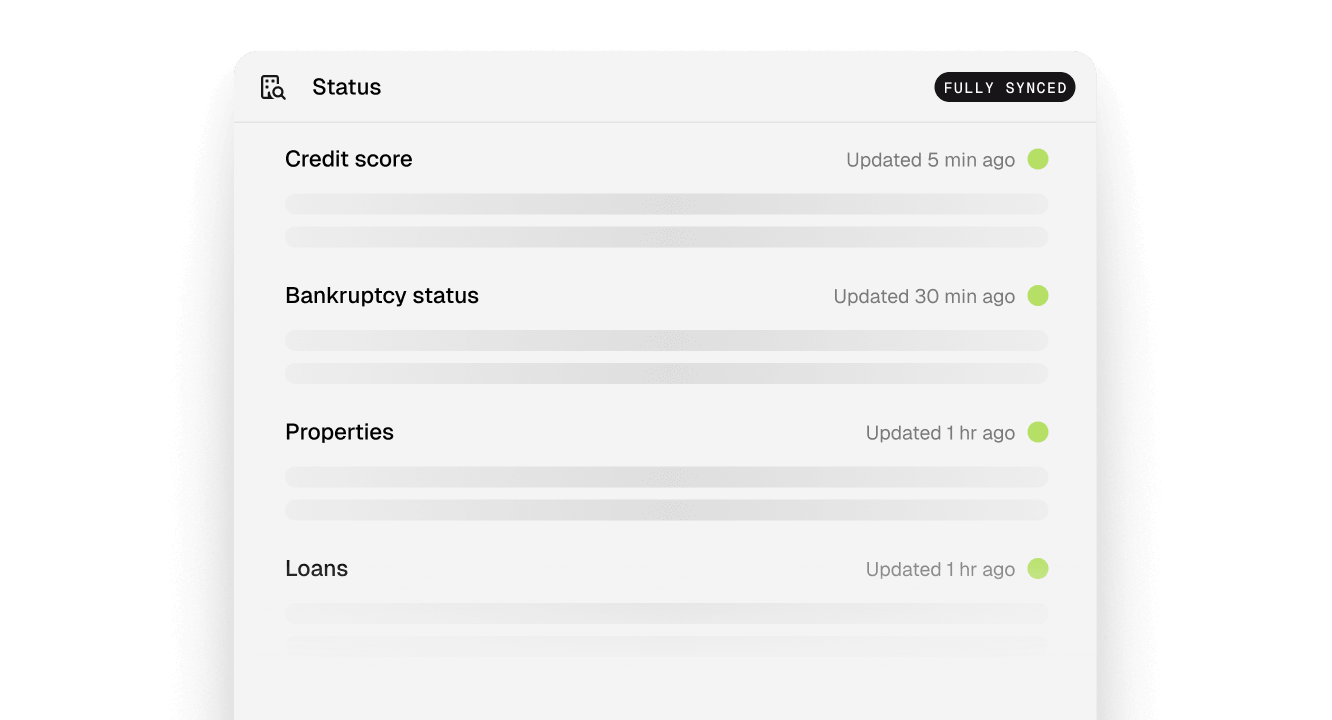
Always fresh data
Traditional credit management works from frozen data. A score captured at onboarding, a report pulled last quarter. Bislab replaces that with a live view of your entire portfolio, updated daily. Every change in creditworthiness, assets, and key events surfaces automatically. Your decisions start reflecting reality, not history.
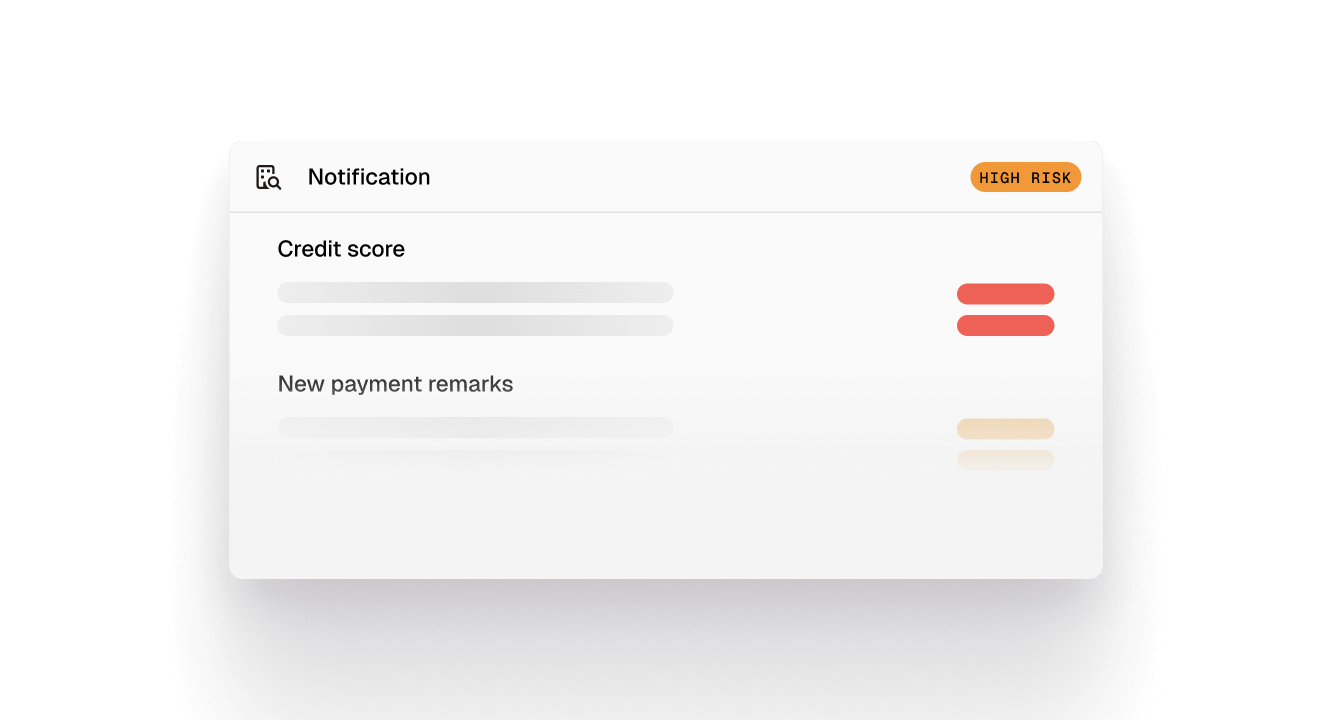
Tailored signals for you
Not every change is relevant to every business. A bank cares about credit score movements. A debt collector cares about asset changes. Bislab lets you define exactly which data fields trigger alerts, so you get signal, not noise. No weekly files. No manual re-checks. Just the changes that matter to you, the moment they happen.

Never miss important changes
The confidence that comes from full portfolio visibility - and always being one step ahead. No more relying on data captured at onboarding. Your portfolio changes and with Bislab your decisions can reflect reality and not a snapshot of it.
How it works

Your customer portfolio
Upload your list once and Bislab monitors every entity continuously, whether you're watching 10 or 10,000.

Tailored signals
Build custom scores or calculated fields on top of the standard trigger set, specific to your business logic.

Act automatically
Connect alerts directly to your systems to trigger credit limit adjustments, case assignments, or customer outreach without human intervention.

Your preferred channel
Flexible APIs and powerful integrations that allows you to receive alerts where your team wants.

Portfolio view
See the live risk state of your entire portfolio in one place, not just individual point-in-time alerts.

Partner mode
Offer monitoring as a service to your own customers, with partner management built in.
Questions and answers
What is credit monitoring?
Following your customers continuously and getting notified when something happens that can affect their creditworthiness, such as a change of company status or a new payment default.
Can a creditor register a company's payment default without a judgment?
Yes, if the claim is due and undisputed and the demand for payment said the default would be registered. The entry can be made no earlier than 14 days and, as a rule, no later than 60 days after the demand (Credit Information Act, section 24).
What is payment behaviour information?
Information on how a company pays its bills. An irregularity entry requires an undisputed claim and a delay of more than 7 days (section 25).